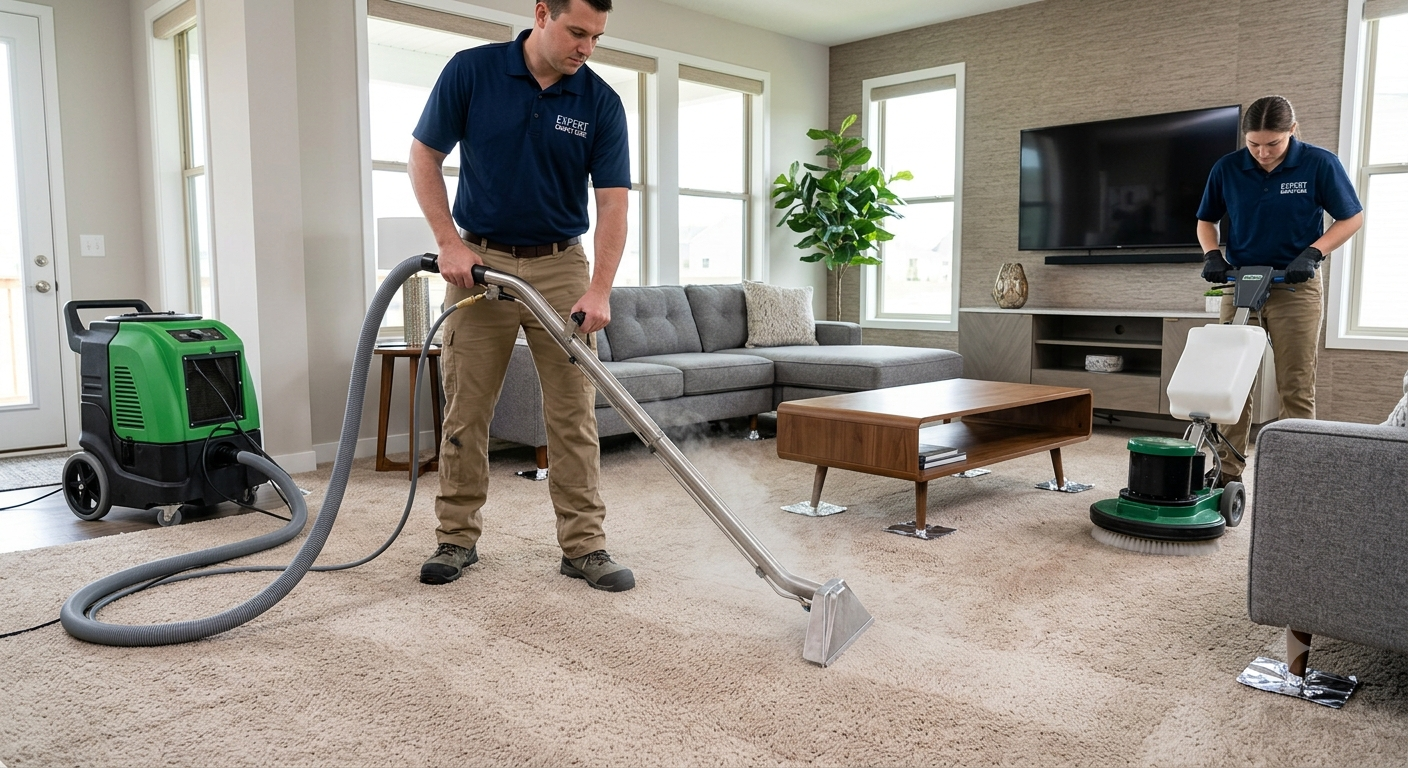
You had your carpets cleaned, and two days later the room still smells damp, the furniture is sitting on foil squares, and a spot you thought was gone has crept back up. That usually isn’t a carpet problem. It’s a water problem. The fix is simple: when you compare dry carpet cleaning vs. steam cleaning. The real difference is how much water goes into your carpet. Knowing that helps you pick the right carpet cleaning method before you book.
How Each Method Actually Works
Every professional cleaning follows the same four steps. A cleaning agent goes on, it gets agitated into the fiber, it sits long enough for the soil to release, and then the soil gets extracted. What changes is how much water is used.
Steam cleaning (hot water extraction)
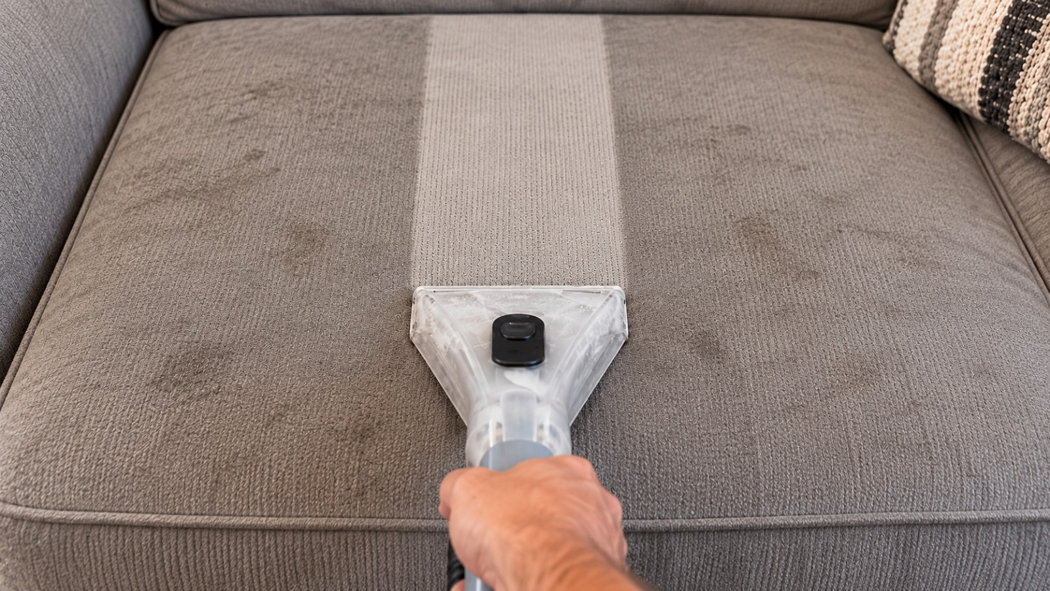
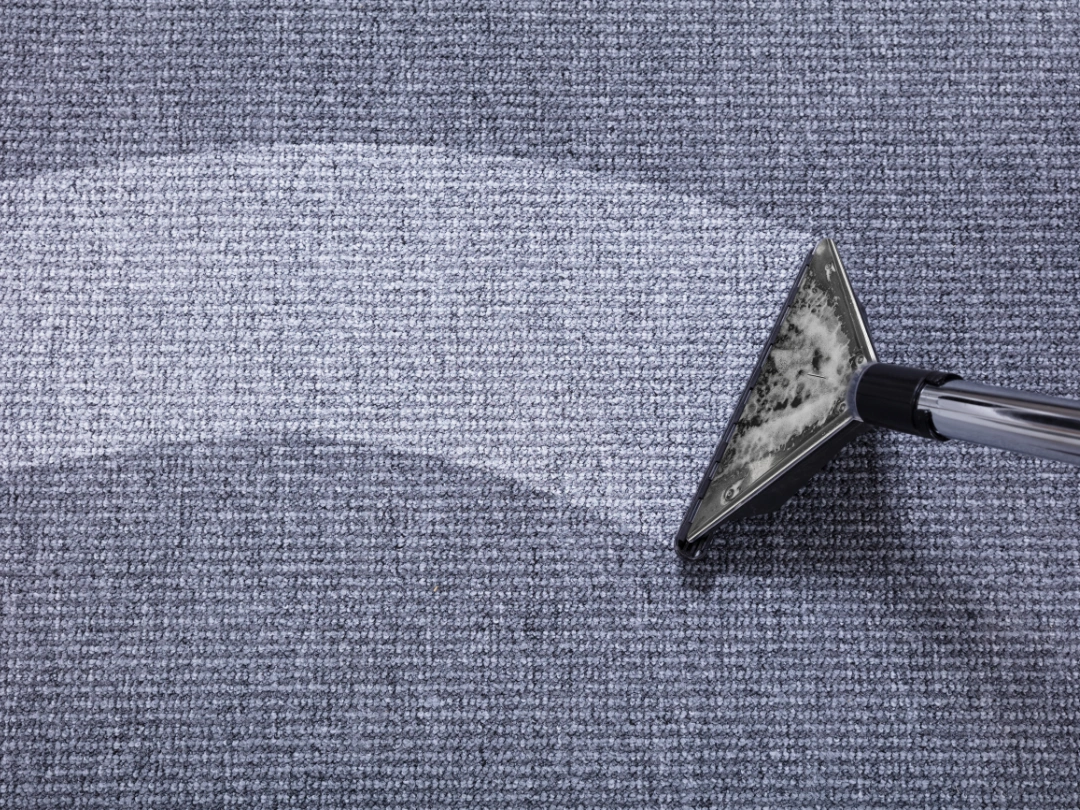
A truck-mounted unit sprays hot water and cleaning solution into your carpet under pressure and vacuums it back out, usually with hoses running into your house. The carpet is soaked, then pulled as dry as the equipment and operator can manage.
Low moisture carpet cleaning
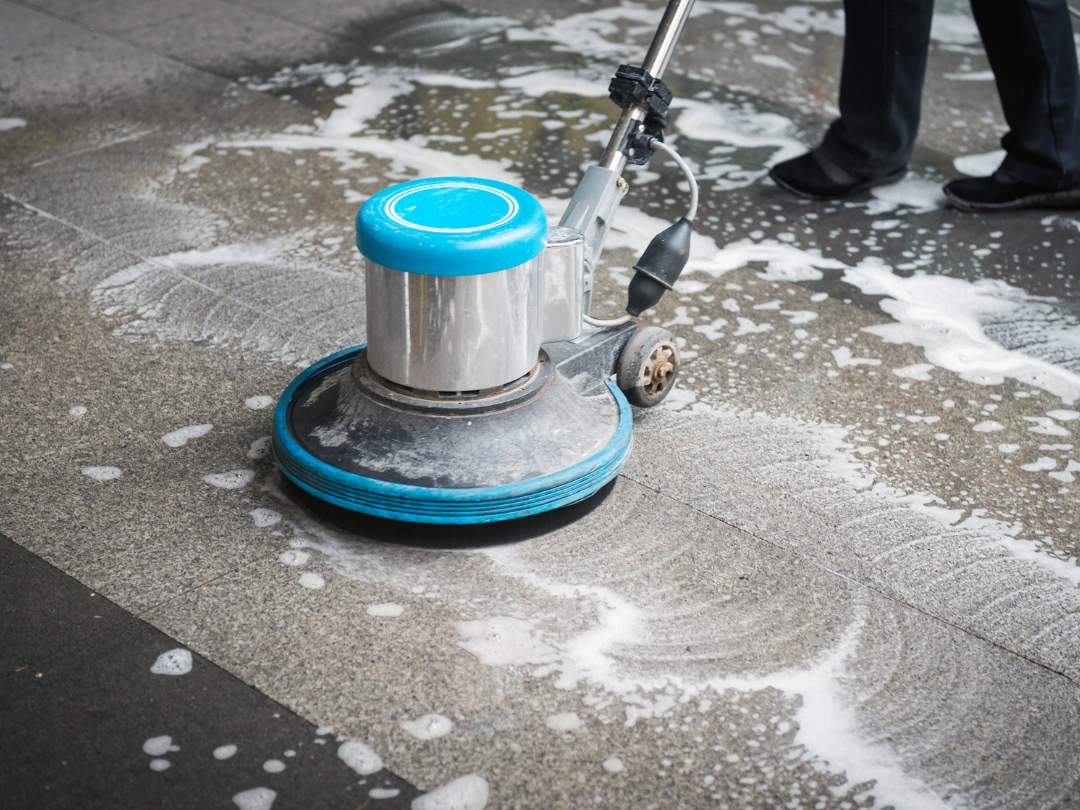
A cleaning compound is worked into the fabric with counter-rotating brushes, given time to grab the soil, and then extracted. This method uses a fraction of the water, and moisture never reaches the backing, pad, or subfloor.
Carpet Drying Time Is the Difference You’ll Notice First
With low-moisture cleaning, carpet drying time is typically minutes to a couple of hours, so you can put your furniture back and use the room the same day. Steam cleaning commonly takes several hours, and a full day of drying (or overnight) isn’t unusual with dense carpet, a thick pad, or humid weather.
The EPA advises drying wet carpet and backing within 24 to 48 hours to prevent mold growth, so the longer your carpet stays damp, the more can go wrong.
What Happens When Carpet Gets Too Wet
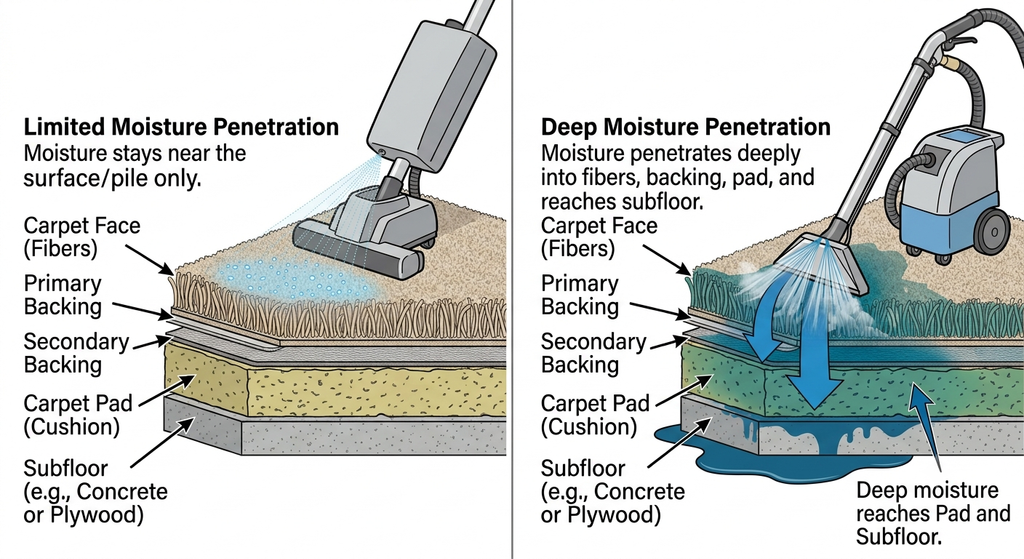
Too much water causes most carpet cleaning complaints, such as the following.
- Wicking: Soil dissolved deep in the carpet rises back to the fiber tips as it dries, and the spot reappears a day later.
- Odor: A pad that stays wet too long starts to smell, and that odor sits below the surface where it can’t simply be cleaned out
- Mold and mildew: Moisture trapped in the pad or subfloor creates a real risk of growth.
- Delamination: Excess water can break down the adhesive holding your carpet’s backing layers together, which is permanent damage.
- Shrinkage and buckling: Some carpets, especially natural fibers, can shrink and pull loose from the tack strip.
A skilled operator can steam clean without over-wetting. The trouble is that you can’t tell in advance who that operator is.
When Steam Cleaning Still Makes Sense
Hot water extraction does have the edge in a few situations.
- Severely neglected carpet, like a commercial space that’s gone years without cleaning or a rental turnover in rough shape
- Pet urine or spills that have soaked through to the pad and subfloor
- Heavy greasy soil in restaurant or industrial spaces
- Carpet whose manufacturer calls for it, such as Shaw’s recommendation of hot water extraction every 6 to 18 months depending on traffic
So is dry carpet cleaning better than steam cleaning? For routine home and business maintenance (which is most carpet cleaning), low-moisture cleaning gets the job done with less risk and far less disruption.
Why Low Moisture Works So Well in Amarillo
Amarillo soil is mostly dry, windblown grit and fine mineral dust, which responds well to thorough dry soil removal followed by low-moisture cleaning. If you have kids, pets, or allergy concerns at home, getting your floor back in use quickly with non-toxic products usually matters more than the idea that more water means a deeper clean. It doesn’t. Cleaning happens at the fiber, and water is just the carrier.
Questions to Ask Before You Book Carpet Cleaning
Is dry carpet cleaning better than steam cleaning for your home specifically? Asking a few questions can help you tell a careful technician from a careless one.
- Will the carpet be vacuumed before any product goes down?
- How long will the carpet take to dry, and when can furniture go back?
- Are the products non-toxic and safe for kids, pets, and allergy sufferers?
- Is my carpet better suited to low-moisture or hot-water extraction, and why?
A team that gives you straight answers, including when your carpet needs something else, is one worth booking.
Getting Clean Carpet Without the Wait
You shouldn’t have to choose between clean carpet and a usable home. Amarillo Dry Carpet & Cleaning Services uses Fast Dry Technology with 100% organic, non-toxic products, so your carpet is typically walkable in about an hour, and a free inspection tells you plainly which method your carpet actually needs.
Call Amarillo Dry Carpet & Cleaning Services today at 806-553-2077. Serving Amarillo and Canyon, Texas.
Frequently Asked Questions
Is dry carpet cleaning better than steam cleaning?
For routine household and commercial soil, yes. It cleans just as well, dries much faster, and keeps water out of the pad. Steam cleaning only wins with severe neglect or contamination that has reached the pad.
Does dry carpet cleaning leave powder behind?
Not when it’s done properly. The cleaning compound is extracted along with the soil it captured, and leftover residue means incomplete extraction with either method.
How soon can I walk on my carpet after low moisture carpet cleaning?
Usually within about an hour. Your technician will tell you exactly what to expect based on your carpet and the room.
Which method is safer for wool or a valuable rug?
Low moisture is the safer choice for natural fibers. A valuable rug is best cleaned in a shop, where it can be dusted, cleaned, and dried under controlled conditions.