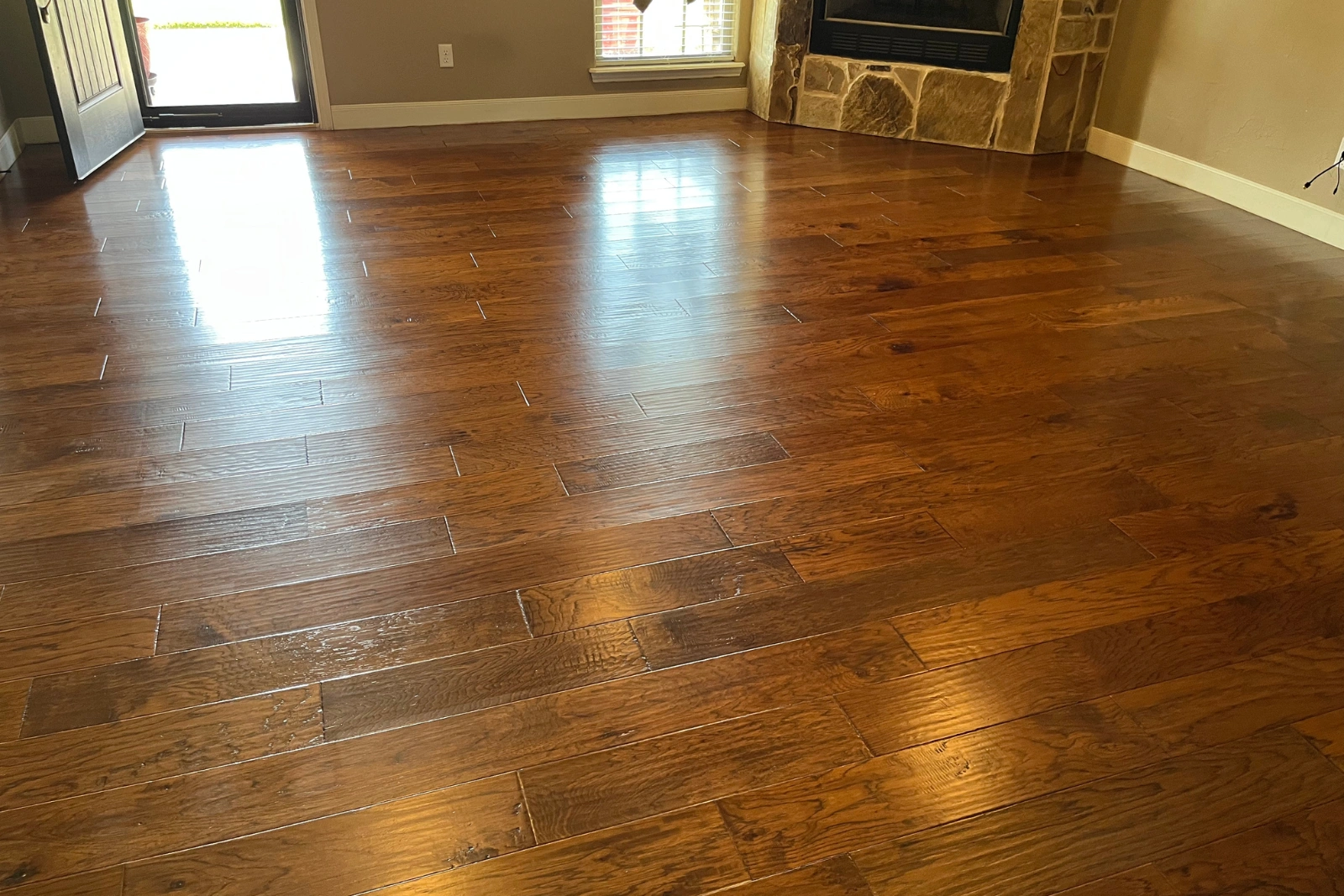
You love the look of your wood floors, but years of foot traffic, fine Amarillo dust, and the odd scratch have left them dull. Before you call anyone about sanding them down, there is one thing you need to know. Not every wood floor can be refinished, and whether yours can comes down to whether it is solid or engineered, and how thick the top layer is. Good hardwood floor cleaning keeps your floors healthy, but refinishing has hard limits. Here is what can and cannot be refinished, so you do not sand through a floor you cannot easily replace.
Solid vs. Engineered: The Difference That Decides Everything
Solid hardwood is one piece of wood from top to bottom, usually about three-quarters of an inch thick. Engineered hardwood is a thin slice of real wood, called the wear layer, glued over a plywood or fiberboard core. From above, the two look identical, and most homeowners cannot tell them apart by sight. The difference only matters when you want to sand and refinish. Engineered floors are common in newer Amarillo builds and over concrete slabs, while many older homes have solid wood underfoot.
How Many Times Can Solid Hardwood Be Refinished
Because solid wood is the same species throughout, it offers the greatest refinishing potential. A three-quarter-inch solid floor can usually be sanded and refinished several times over its life. This is why solid oak floors in older Amarillo homes are still in use today. Each sanding removes only a small amount of wood, often around a thirty-second of an inch, so the floor has room for many cycles. The limit is the tongue and groove. Once sanding reaches that point, the boards can no longer be refinished and need to be replaced.
How Many Times Can Engineered Hardwood Be Refinished
Engineered floors are limited by that top wear layer. The National Wood Flooring Association notes that a wear layer should generally be at least 3/32 of an inch (about 2.5 millimeters) to be refinished safely. A thicker 4 to 6-millimeter wear layer can handle two or more sandings. A thin veneer of one millimeter or less cannot be sanded at all, because you would cut straight through to the plywood core. Once that happens, the floor is ruined, and there is no fixing it.
How to Check Your Wear Layer
Check the original paperwork from your installer or builder, if you still have it, since the wear layer thickness is often listed there. If not, a flooring technician can measure it at a doorway, a stair edge, or a heating vent where the board edge is exposed. Never guess based on how the surface looks. Sanding through an engineered floor means replacing it, not refinishing it, and that mistake is expensive.
What Can Be Done When Refinishing Is Off the Table
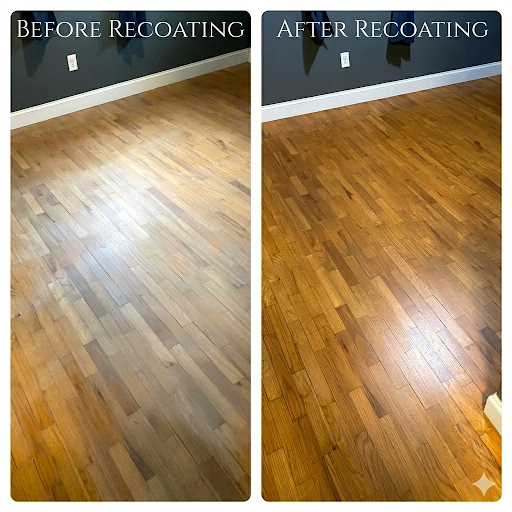
If your wear layer is too thin to sand, you still have options:
- Screen and recoat: Adds a fresh finish coat without deep sanding, hiding light scratches and restoring shine for a fraction of the cost of a full refinishing.
- Steady cleaning: Keeps grit from grinding down the finish in the first place, so the floor wears more slowly.
- Ceramic coating: Seals the surface for extra protection and makes everyday cleaning easier.
These steps can add years to a floor that cannot take another sanding.
Caring for the Floors You Keep
Whatever floor you have, the basics protect it. Sweep or vacuum often so dust does not act like sandpaper underfoot, which matters in a windy, dusty area like the Panhandle. Wipe up spills quickly, since standing water can damage both solid and engineered wood. Use rugs at doorways to catch grit before it reaches the finish. And if wood is not the right fit for a damp room, low-moisture carpet cleaning keeps soft flooring fresh without soaking it.
Know What You Have Before You Sand
Solid hardwood gives you the most chances to refinish, while engineered floors depend entirely on the thickness of that top layer. Before you sand anything, find out what you actually have under your feet, because one wrong pass can turn a fixable floor into a replacement job. If you are not sure whether your floors in Amarillo can be refinished, request a free estimate from Amarillo Dry Carpet and Cleaning Services and let a trained team check before any work begins.
Frequently Asked Questions
How do I know if my floor is solid or engineered hardwood?
Check the original installation paperwork, or look at a cut edge near a vent or doorway. Solid wood has the same grain all the way through, while engineered wood has thin plywood layers beneath the top slice.
Can engineered hardwood floors be refinished?
Sometimes. It depends on the wear layer. A thick 4- to 6-millimeter layer can take a sanding or two, but a thin veneer of about 1 millimeter can only be recoated, not sanded.
How many times can solid hardwood be refinished?
A standard three-quarter-inch solid floor can usually be refinished several times across its lifespan, because each sanding removes only a small amount of wood.
What is a screen and recoat?
It is a light refresh that adds a new finish coat without deep sanding. It hides light scratches and restores shine, and it is a good option when the wear layer is too thin to sand.
Does refinishing remove deep scratches?
Full sanding can remove deeper scratches in solid wood and thick engineered floors. A screen and recoat only handles surface wear, so serious damage usually needs full sanding or board replacement.