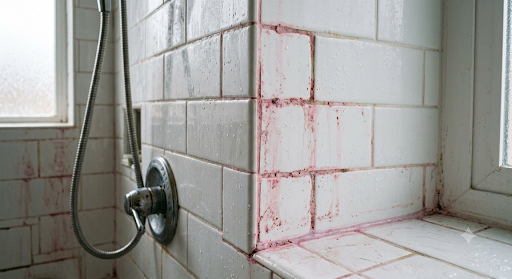
You scrubbed the grout last weekend. It looked great for maybe four days. Now that same pink film is creeping back along the shower floor and up into the corners, and no amount of bleach seems to keep it gone for long. That’s not bad luck or a cleaning mistake on your part. It’s a living organism, and understanding what it actually is changes how you deal with it for good.
What That Pink Film in Your Grout Actually Is
The pink or orange residue showing up on shower grout isn’t mold at all. It’s a bacterium called Serratia marcescens, and it produces a pigment called prodigiosin that gives it that unmistakable rosy tint. This bacterium is airborne, feeds on soap scum, body oils, and mineral residue, and thrives specifically in damp, humid environments like a shower floor. According to reporting from Forbes Home, this is exactly why it reappears so fast after a normal cleaning.
Unlike typical fungal mold spores that take weeks to establish visible colonies, Serratia marcescens is highly opportunistic. It continuously travels through the open air, floating into your bathroom through open windows, ventilation shafts, or simply on dust particles. The moment it lands on a wet, unprotected surface, it begins multiplying exponentially. Within a matter of 48 to 72 hours, a microscopic colony can expand into a visible, slimy pink biofilm that spreads across your grout lines and caulk joints.
Why Scrubbing Alone Never Keeps It Away
Standard consumer cleaning methods are inherently reactive. They focus on removing the visible film rather than altering the environment that invited the bacteria in the first place.
Understanding how pink bacteria spreads in a shower reveals why manual scrubbing ultimately falls short:
- Airborne Resettling: Because Serratia marcescens is airborne, new bacteria settle back onto the surface within hours of cleaning, not weeks.
- Surface-Level Treatment: Standard cleaning removes the visible film but doesn’t change the moisture and residue conditions the bacteria need to grow.
- Microscopic Pores: Unsealed grout has microscopic pores where the bacteria can embed below the surface, completely out of reach of a sponge or manual scrub brush.
- Built-In Food Supply: Soap scum, shampoo residues, and skin oils left behind after a quick rinse act as a direct food source, fueling the next wave of bacterial growth.
Pink Bacteria vs Black Mold: Telling Them Apart
| Feature | Pink Grout Film | Black Mold |
| Organism type | Bacteria (Serratia marcescens) | Fungus |
| Texture | Slimy, thin biofilm | Fuzzy or powdery |
| Typical color | Pink, orange, or reddish | Black or dark green |
| Speed of return | Days after cleaning | Weeks, if ventilation is poor |
| Main risk group | Immunocompromised individuals, open wounds | Respiratory sensitivity, allergies |
Health Risks Worth Taking Seriously
For most healthy adults, brief contact with Serratia marcescens during a shower isn’t a major concern. It becomes a real issue for people with weakened immune systems, open wounds, or young children who may touch a contaminated surface and then their eyes or mouth. Left untreated long enough, it can also work into damaged caulk and grout, making the surface harder to clean each time. Treating it as a cosmetic issue rather than a bacterial one is how it keeps coming back.
How Tile and Grout Restoration Amarillo Fixes the Root Cause

Tile and grout restoration goes further than a surface scrub. It typically includes deep extraction cleaning to pull residue out of the grout pores, repair or replacement of damaged grout lines where bacteria have embedded, and a color seal that closes the porous surface bacteria need to colonize. Closing that pore structure is the part a weekend cleaning session simply can’t do. Once the grout is sealed properly, there’s nowhere left for the biofilm to take hold.
Why Travertine Needs a Different Approach
If you have searched for travertine cleaning because your shower features natural stone, your surfaces require specialized care due to unique material risks:
- High Porosity: Travertine is full of natural voids and pits that hold onto moisture and soap residue much longer than ceramic or porcelain tile, acting like a sponge for pink bacteria.
- Deep Staining: Unsealed stone pulls the bacterial pink pigment deep into its matrix, leading to permanent, subsurface discoloration.
- Chemical Sensitivity: Natural stone floors and countertops require strictly pH-balanced products. Using harsh bleaches or acidic store-bought cleaners will instantly etch the stone, leaving permanent dull spots.
Key Takeaways
- Pink grout stains are caused by an airborne bacterium called Serratia marcescens, not mold, and not a cleaning failure on your part.
- It returns quickly because the bacteria resettles from the air and feeds on soap scum and moisture that a quick scrub doesn’t eliminate.
- Unsealed, porous grout gives the bacteria a place to embed below the surface where cleaning can’t reach it.
- Tile and grout restoration closes that porous surface through deep cleaning, repair, and sealing, which is the only lasting fix.
- Travertine needs a different, pH-balanced cleaning and sealing approach because it’s more porous than standard ceramic tile.
Stop Cleaning the Same Stain Every Week
If the pink film keeps returning within a few days no matter how often you scrub, it is your clear signal to skip the bleach aisle and call professional shower restoration specialists in Amarillo. Attempting to fix a failing seal with consumer-grade top sprays will only trap moisture and existing bacteria, worsening the issue over time. Investing in professional refurbishing eliminates the root environmental cause of bacterial growth by addressing grout condition, caulk integrity, and protective sealing all at once.
Stop fighting a losing battle against stubborn bathroom stains and protect your home with a clean, low-maintenance environment. Request a free estimate from Amarillo Dry Carpet & Cleaning Services today to restore your tile and permanently lock out bacterial growth.
Frequently Asked Questions
Is pink mold in the shower dangerous?
For healthy adults, brief exposure is usually low risk, but it can cause issues for people with weakened immune systems, open wounds, or young children. It’s still worth removing promptly since it can spread to caulk, curtains, and other bathroom surfaces.
Why does pink grout come back so fast even after bleaching?
Bleach kills the visible biofilm but doesn’t change the moisture, soap residue, or porous grout surface that let the bacteria return. Since Serratia marcescens is airborne, new bacteria can resettle within days unless the grout is sealed and the area stays dry.
Can I seal grout myself to stop pink stains from returning?
DIY sealers can help temporarily, but they don’t address damaged grout or bacteria already embedded below the surface. Professional restoration cleans and repairs the grout first, then seals it properly so the fix actually lasts.
Does travertine need to be cleaned differently than ceramic tile?
Yes. Travertine is more porous and absorbs moisture faster, which makes it more prone to pink bacterial staining and etching from acidic cleaners. It needs a pH-balanced cleaner and a sealant suited to natural stone rather than a generic tile product.